📍 Etway S.R.L. | VIA KUFSTEIN 1, 38121 TRENTO (ITALY) | 📞 +39 0461 99 36 43

When the roof isn’t enough: Vertical solar panels turn spaces into energy
When there is no more space available on the roof or when that space cannot be used, vertical solar systems make it possible to transform gardens, terraces, fences, and outdoor areas into new surfaces capable of generating energy, combining technology, design, and functionality without compromising the quality of these spaces.
When space runs out, your perspective changes
The challenge today isn’t just about generating energy from the sun—it’s about finding new, smart ways to do so.
More and more people would like to generate renewable energy, reduce their energy consumption, and make their homes or buildings more energy-efficient, but they face a real problem: their roof is already occupied, too small, shaded, shared, subject to restrictions, or simply unusable.
So this raises a very practical question: if I can’t install any more panels on the roof, does that mean I have to stop here?
No. When the roof is no longer sufficient, vertical solar panels allow you to make use of surfaces that often remain unused: gardens, terraces, fences, courtyards, building facades, outdoor seating areas, and street furniture. This way, you can continue to generate energy without compromising the functionality, aesthetics, or quality of the space.
A New Approach to Solar Power
When the roof is full or cannot be used, one option is to install panels on sloped structures on the ground or on angled supports. This is a possible solution, but it is not always feasible: it requires space, spacing between the modules, good sunlight exposure, and an open area to be used almost exclusively for energy production.
Not everyone, however, has such large areas at their disposal. Whether in a private home, a hospitality facility, or a business setting, outdoor spaces must often remain livable, accessible, and tidy.
Ground-mounted tilted photovoltaic system: solar energy at the cost of large, dedicated open spaces.
Another option is balcony solar panels, which offer an easy way to get started with solar energy. However, this solution, too, may have limitations in terms of surface area, available power, and continuous use, especially when the goal is to go beyond low levels of consumption.
Balcony solar panels: a compact and affordable solution, designed primarily for low energy consumption and limited spaces.
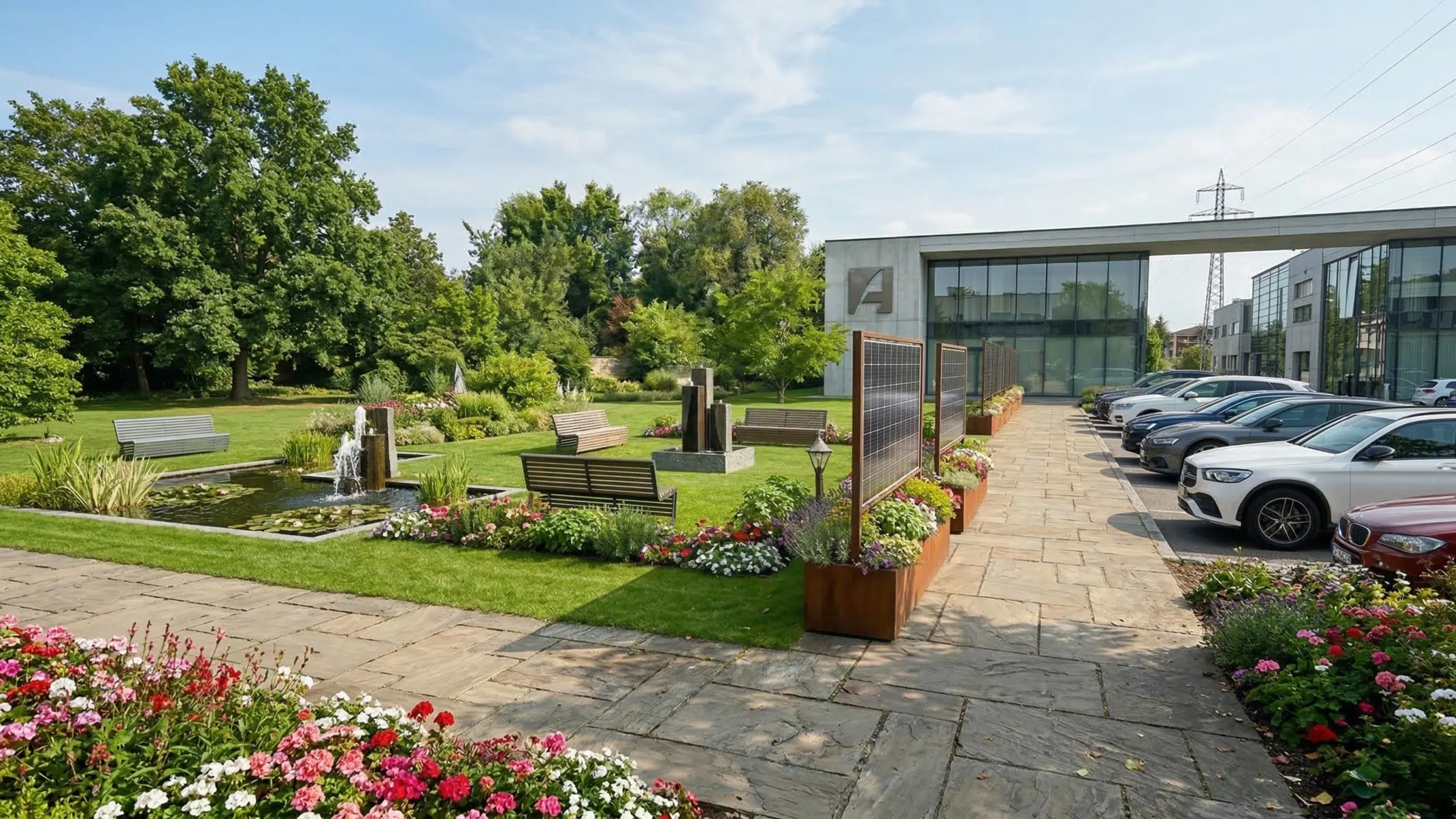
The third option is vertical photovoltaics: a solution that doesn’t require large open spaces but makes use of elements already present in the space. Fences, dividers, planters, railings, privacy screens, and outdoor structures can become power-generating surfaces without necessarily taking up new space.
From the Roof to Unused Spaces
Vertical photovoltaics stem from a simple need: to transform existing—but often unused— surfaces into elements capable of generating energy.
It’s not just a matter of “adding panels,” but of rethinking how outdoor spaces can become useful, productive, and integrated into their surroundings.
Residential: gardens, terraces, courtyards
For a private home, vertical solar panels can be installed in the garden, on a terrace, along a fence, or in a courtyard. They can help power small appliances, outdoor lighting, outdoor devices, or areas you want to make more self-sufficient.
Accommodation facilities: swimming pools, walking trails, and guest areas
For hotels, farm stays, glamping sites, and other lodging facilities, vertical solar panels can be integrated into outdoor areas without compromising the guest experience. They can be installed near swimming pools, relaxation areas, dividers, outdoor reception areas, walking paths, outdoor seating areas, or green spaces, combining energy efficiency, order, and aesthetic appeal.
Businesses: dividers, parking lots, and functional areas
Even in the corporate sector, vertical solar power can be an attractive solution for enhancing parking lots, entrances, green spaces, break areas, and dividers between outdoor spaces or company pathways. In these contexts, renewable energy becomes an integral part of spatial planning and the company’s sustainable image.
SalvaTerra: An Example of Integrated Vertical Photovoltaics
One of the most interesting aspects of vertical photovoltaics is that it not only focuses on energy production but also on the quality of the space.
A panel can be integrated into an outdoor feature, provide privacy, define an area, enhance a garden, line a path, or make an outdoor space more functional. In this way, the solar panels do not appear out of place but become part of the environment.
A concrete example of this trend is Salvaterra, EtWay’s photovoltaic planter: a true energy hub designed to combine greenery, design, and solar power generation in a variety of settings, from private homes to hospitality and urban spaces.
SalvaTerra can be configured in various ways: as a plug-and-play system, with a storage battery, or as an off-grid system, depending on the space available and energy needs.
This is an example of how vertical photovoltaics can go beyond the concept of the traditional panel, becoming an active, useful solution that is integrated into the outdoor environment—one capable of combining energy production, design, and elegance.
So the real turning point is this: don’t always look for new space, but transform the existing space into an energy resource.
Plug-and-play, battery, or off-grid system?
Vertical solar panels can be adapted to meet a variety of needs.
For low energy consumption, you might consider a simple, compact plug-and-play solution. When you want to store the energy you generate for later use, a storage battery comes into play. If, on the other hand, you want to power an area not connected to the grid, you can design a stand-alone system, which is useful for lights, devices, outdoor services, or dedicated utilities.
The choice always comes down to three questions: What do I want to power, when do I need energy, and how much battery life do I want?